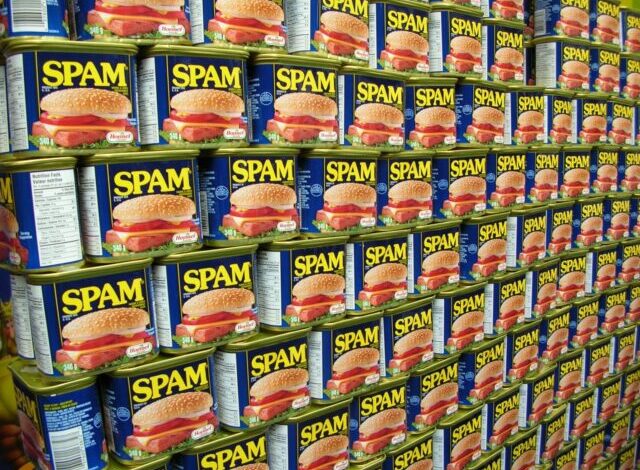
We Grew Up Eating SPAM, but Most of Us Never Knew These Facts
November 5, 2026If you grew up in an American household where a blue-and-yellow can of SPAM was always tucked away in the pantry, you’re definitely not alone.
For generations, families have fried it for breakfast, tucked it into sandwiches, mixed it with rice, and served it alongside eggs. Some people love its salty, savory flavor. Others have spent their entire lives wondering what is actually inside that familiar can.
But the real story of SPAM is more interesting than many people realize.
From its surprising list of ingredients to its important role during World War II, this inexpensive canned meat has a history that stretches far beyond the grocery store shelf.
And one detail on its nutrition label may surprise people who have been eating it for decades.
What Is SPAM Actually Made Of?
Despite its reputation as a mysterious canned meat, SPAM Classic has a relatively short ingredient list.
According to Hormel Foods, the original SPAM Classic product contains six ingredients:
- Pork with ham: The primary meat ingredient.
- Salt: Adds flavor and contributes to preservation.
- Water: Helps create the product’s texture.
- Modified potato starch: Helps bind the ingredients and retain moisture.
- Sugar: Balances the savory flavor.
- Sodium nitrite: A curing ingredient used in processed meat products.
That’s the complete ingredient list for SPAM Classic as published by the manufacturer.
However, other SPAM varieties may have different ingredients, so it’s important to check the specific product label.
Is SPAM Really Made From Mystery Meat?
One of the most persistent rumors about SPAM is that it contains unidentified meat scraps or unusual animal parts.
According to Hormel, SPAM Classic is made with pork and ham.
The company explains that the pork component comes from pork shoulder, while ham provides additional meat and flavor.
These ingredients are ground, combined with the other components, and processed into the familiar canned product.
SPAM is a processed meat, but that does not mean its ingredients are unidentified.
The actual ingredients are publicly listed on the packaging and the manufacturer’s website.
The Surprising History of SPAM Goes Back to 1937
SPAM was introduced on July 5, 1937, by Hormel Foods in Austin, Minnesota.
At the time, American households were looking for affordable and convenient foods that could be stored and prepared with minimal effort.
Refrigeration was not as widespread or convenient as it is today, and shelf-stable products offered practical advantages.
SPAM was designed to provide a convenient source of meat that could remain unopened in the pantry without refrigeration.
Its distinctive rectangular can and recognizable branding helped it become a familiar sight in grocery stores across the country.
But it was World War II that helped turn SPAM into an international phenomenon.
Why SPAM Became So Important During World War II
When World War II began, supplying food to troops stationed far from home became a major logistical challenge.
Fresh meat required refrigeration and could spoil during transportation.
Canned meat offered a practical alternative.
SPAM could be shipped long distances, stored without refrigeration while unopened, and prepared in different ways.
Hormel Foods reports that more than 100 million pounds of SPAM were shipped overseas to help feed Allied troops during the war.
For many service members, the product became a regular part of wartime meals.
Some soldiers grew tired of eating it so frequently, while others appreciated its convenience.
After the war, SPAM remained familiar to millions of families and became deeply connected with American food history.
Why Is SPAM So Popular in Hawaii?
One of the most interesting chapters in SPAM’s history is its lasting popularity in Hawaii.
The product became widely available in the islands during World War II, when it was used to feed military personnel.
Over time, local cooks incorporated it into everyday meals.
SPAM paired especially well with rice, which was already an important part of Hawaiian food culture.
Today, the product appears in breakfast dishes, fried rice, sandwiches, and one of Hawaii’s most recognizable snacks: SPAM musubi.
What Is SPAM Musubi?
SPAM musubi is typically made with a slice of cooked SPAM placed over a block of rice and wrapped with nori seaweed.
It combines familiar ingredients into a convenient handheld snack.
The dish is widely sold in convenience stores and food establishments throughout Hawaii.
SPAM has become so closely associated with local food culture that Hawaii even hosts the Waikiki SPAM JAM festival.
What Does the Name SPAM Actually Stand For?
The origin of the name SPAM has inspired plenty of theories.
Some people believe it stands for “spiced ham,” while others have suggested different explanations.
Hormel Foods confirms that the name was submitted by Ken Daigneau, who won a naming contest in 1937.
He received a $100 prize for suggesting the name.
However, the company has not established one universally confirmed explanation of what each letter is supposed to represent.
Therefore, claims that SPAM definitely stands for a particular phrase should be treated cautiously.
How Is SPAM Made?
SPAM’s manufacturing process is designed to create a shelf-stable canned meat product.
According to the official SPAM website, the process begins by grinding the pork and ham.
The meat is mixed with salt, water, modified potato starch, sugar, and sodium nitrite.
Once the ingredients are combined, the mixture is placed into metal cans.
The cans are sealed and heated as part of the commercial cooking and preservation process.
After cooling, the cans are labeled and prepared for distribution.
This processing allows unopened cans to be stored according to the manufacturer’s shelf-life instructions without refrigeration.
Once opened, SPAM should be refrigerated promptly and handled like other cooked meat products.
How Much Sodium Is in SPAM?
One of the most important things to understand about SPAM is its sodium content.
According to Hormel’s product nutrition information, a 2-ounce (56-gram) serving of SPAM Classic contains approximately 770 milligrams of sodium.
That represents about 33% of the FDA’s Daily Value for sodium.
For comparison, the FDA’s Daily Value for sodium is less than 2,300 milligrams per day for adults and children aged four and older.
Eating multiple servings of SPAM can therefore contribute a substantial amount of sodium to your daily intake.
People who have been advised to limit sodium should pay particular attention to portion sizes and product labels.
SPAM Classic Nutrition Facts
According to Hormel Foods, one 2-ounce serving of SPAM Classic provides approximately:
| Nutrient | Amount Per 2-Ounce Serving |
|---|---|
| Calories | 180 |
| Total Fat | 16 g |
| Saturated Fat | 6 g |
| Protein | 7 g |
| Sodium | 770 mg |
| Total Carbohydrates | 1 g |
| Cholesterol | 40 mg |
These values apply to the referenced SPAM Classic label. Nutritional information can vary between products, package sizes, markets, and formulations.
Always check the label on the product you purchase.
Is SPAM Healthy to Eat?
SPAM provides protein and calories, but it also contains substantial amounts of sodium and saturated fat.
It is classified as processed meat because it undergoes curing and preservation processes.
Health organizations generally recommend limiting processed meat consumption as part of a balanced eating pattern.
The World Health Organization’s International Agency for Research on Cancer has classified processed meat as carcinogenic to humans, based on sufficient evidence linking processed meat consumption with colorectal cancer.
This classification describes the strength of the evidence that a hazard exists. It does not mean that eating SPAM once carries the same risk as smoking or that an individual serving will cause cancer.
The amount eaten, frequency of consumption, and overall dietary pattern all matter.
For people who enjoy SPAM, considering portion sizes and balancing meals with vegetables, whole grains, and other nutrient-rich foods is a practical approach.
Can You Eat SPAM Straight From the Can?
Yes. SPAM Classic is fully cooked during manufacturing.
According to the manufacturer, it can be eaten directly from the can without additional cooking.
However, many people prefer to heat or fry it because cooking changes the texture and creates a browned exterior.
Pan-fried SPAM is particularly popular in breakfast sandwiches, rice dishes, and traditional Hawaiian recipes.
Always check the can for damage, follow storage instructions, and avoid consuming food from cans that are bulging, leaking, or otherwise show signs of compromised packaging.
Does SPAM Need to Be Refrigerated?
Unopened, commercially sealed SPAM is shelf-stable and does not normally require refrigeration.
It should be stored in a cool, dry location and used according to the manufacturer’s date and storage guidance.
After opening the can, transfer any leftovers to a suitable covered container and refrigerate promptly.
As a general food safety guideline, cooked meat leftovers should be used within three to four days when properly refrigerated at 40°F or below.
Discard food that has been left at room temperature for more than two hours, or more than one hour when temperatures exceed 90°F.
Popular Ways Americans Still Eat SPAM
Although SPAM has been around since 1937, it remains a versatile ingredient in many kitchens.
1. Fried SPAM and Eggs
Thin slices of SPAM are browned in a skillet and served alongside scrambled or fried eggs.
2. SPAM Breakfast Sandwiches
Cooked SPAM can be layered with eggs and cheese on toast, biscuits, or English muffins.
3. SPAM Fried Rice
Diced SPAM is cooked with rice, vegetables, and seasonings for a quick and satisfying meal.
4. SPAM Musubi
This Hawaiian favorite combines cooked SPAM, rice, and nori seaweed.
5. SPAM and Potatoes
Chopped SPAM can be browned with diced potatoes and onions for a hearty skillet meal.
6. Grilled SPAM Sandwiches
Pan-fried SPAM can be served between slices of toasted bread with your favorite toppings.
Is There a Lower-Sodium Version of SPAM?
Yes. Hormel offers a SPAM variety labeled 25% Less Sodium.
This version is designed for consumers who prefer a product with less sodium than SPAM Classic.
However, reduced-sodium products can still contain significant amounts of sodium.
Compare the Nutrition Facts labels to determine how a particular product fits your dietary needs.
Frequently Asked Questions About SPAM
What meat is SPAM made from?
SPAM Classic is made from pork with ham, according to the official Hormel ingredient list.
Does SPAM contain six ingredients?
Yes. The current SPAM Classic formula lists pork with ham, salt, water, modified potato starch, sugar, and sodium nitrite.
When was SPAM invented?
SPAM was introduced by Hormel Foods on July 5, 1937, in Austin, Minnesota.
Why was SPAM popular during World War II?
Its shelf stability, portability, and convenience made it useful for supplying meat to military personnel overseas.
What does SPAM stand for?
The exact meaning of the name has been debated. Hormel confirms that Ken Daigneau submitted the winning name in a 1937 contest.
Is SPAM already cooked?
Yes. SPAM Classic is fully cooked during manufacturing and can be eaten directly from the can.
Is SPAM high in sodium?
Yes. A 2-ounce serving of SPAM Classic contains approximately 770 milligrams of sodium, based on the referenced Hormel nutrition label.
Is SPAM the same as ham?
No. SPAM is a canned processed meat product made with pork and ham along with additional ingredients. Traditional ham is a different meat product.
Why do people in Hawaii love SPAM?
SPAM became popular in Hawaii during World War II and was gradually incorporated into local dishes, including SPAM musubi and fried rice.
Can SPAM be part of a balanced diet?
It can be eaten occasionally, but its sodium, saturated fat, and processed meat classification are important considerations. Dietary needs vary by individual.
Final Thoughts
For millions of Americans, SPAM is more than a canned meat product. It’s a familiar part of family meals, childhood memories, and American food history.
But behind the iconic blue-and-yellow can is a story that includes a 1937 naming contest, World War II military rations, Hawaiian food traditions, and a surprisingly short ingredient list.
The most important nutritional detail to remember is that SPAM Classic contains a substantial amount of sodium and saturated fat in a relatively small serving.
Knowing what’s inside the can makes it easier to decide how often and how much to enjoy.
Whether you grew up eating fried SPAM sandwiches or have never tried it, there’s no denying the product’s unusual place in American food culture.
Did your family eat SPAM when you were growing up? What’s your favorite way to prepare it?