No more bland watermelons! Here’s a sure-fire visual guide to finding the sweetest fruit at the market.
August 6, 2026Choosing a sweet watermelon can feel like a guessing game, especially when every melon at the store looks similar from the outside. A few practical checks can help you compare the options and choose a watermelon that is more likely to be ripe, juicy, and flavorful.
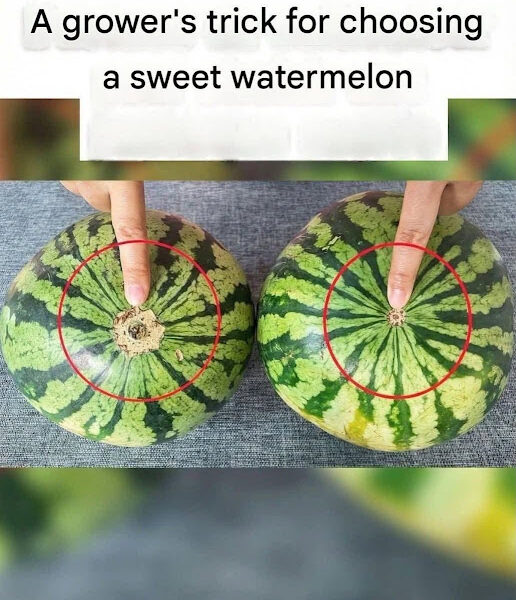
The image above highlights a commonly discussed feature: the blossom end, which is the small circular mark on the end opposite the stem. Some shoppers believe a smaller, tighter blossom end may be a better sign than a large, rough opening. That detail can be useful as one comparison point, but it should not be treated as a guarantee.
The best approach is to combine several signs, including the field spot, weight, shape, rind appearance, stem condition, sound, and overall firmness. No single trick is completely reliable, but checking several features together gives you a better chance of taking home a good watermelon.
Quick Checklist for Choosing a Sweet Watermelon
- Look for a creamy yellow field spot.
- Choose a melon that feels heavy for its size.
- Pick one with an even, symmetrical shape.
- Look for a dull rather than highly glossy rind.
- Check that the rind feels firm and undamaged.
- Compare the stem and blossom end.
- Use the sound test only as an extra clue.
Do not rely on just one of these signs. A watermelon with a good field spot but soft damaged areas is not a good choice, and a heavy watermelon with no visible field spot may still be less mature than another option.
What the Blossom End May Tell You
The blossom end is the small circular area on the side opposite the stem. It marks the point where the flower was attached while the watermelon was developing.
In many online visual guides, a smaller and more compact blossom end is presented as a sign of a sweeter or better-developed watermelon. A large, rough, or cracked blossom end is sometimes associated with uneven development.
This comparison may be useful when two watermelons look similar in every other way. However, the appearance of the blossom end can vary by variety, growing conditions, handling, and natural differences between melons.
Use the blossom end as a secondary clue rather than the only deciding factor. If one watermelon has a smaller blossom end but feels light, looks glossy, or has a pale field spot, another melon may still be the better choice.
Look for a Creamy Yellow Field Spot
The field spot is the area where the watermelon rested on the ground while growing. It is one of the most useful visual features to inspect.
A ripe watermelon often has a field spot that is creamy yellow, buttery yellow, or deep golden. This color suggests that the fruit spent enough time resting on the ground and developing before harvest.
A very pale white or greenish field spot may indicate that the watermelon was harvested earlier. That does not automatically mean the fruit will be tasteless, but a deeper yellow spot is usually the better option when comparing similar melons.
The field spot should look natural and dry. Avoid watermelons with soft, wet, sunken, or moldy patches, even if the color seems right.
Choose a Watermelon That Feels Heavy
Pick up several watermelons that are close in size. The one that feels heavier often contains more water and may be juicier.
This test works best when comparing melons of similar shape and size. A large watermelon will naturally weigh more than a small one, so the goal is not to choose the heaviest melon in the entire display. Choose the one that feels unexpectedly heavy for its size.
A watermelon that feels unusually light may have less moisture inside or may have lost water during storage.
Check the Shape
Look for a watermelon with an even, balanced, and symmetrical shape. Round and oval watermelons can both be excellent, depending on the variety.
A consistent shape usually suggests steady growth. Large dents, deep flat areas, unusual bulges, or heavily uneven sides can sometimes be signs of irregular growing conditions.
Minor surface variation is normal. The main goal is to avoid fruit that looks severely distorted, damaged, or compressed.
Inspect the Rind
A mature watermelon often has a rind that looks more dull or matte than shiny. A highly glossy rind can sometimes indicate that the melon was picked earlier, although rind appearance varies among varieties.
The skin should feel firm and solid. Avoid watermelons with:
- Soft or spongy areas
- Deep cracks
- Open cuts
- Leaking juice
- Wet or moldy patches
- Large bruised areas
Small scratches, dry scuffs, or harmless surface marks are usually cosmetic and do not necessarily affect the fruit inside.
Check the Stem
If the watermelon still has part of its stem attached, examine its color and texture. A dry, brown stem is commonly associated with a melon that had more time to mature before separation from the vine.
A bright green stem may suggest the fruit was harvested more recently or earlier. However, stems can also dry during transport and storage, so this sign is not completely dependable by itself.
When the stem is missing, rely more heavily on the field spot, weight, shape, and rind.
Try the Sound Test
Many shoppers tap or knock on a watermelon and listen to the sound. A ripe, juicy melon is often described as producing a deep, hollow, or resonant sound.
A flat or dull sound is sometimes associated with an overripe or less juicy interior, while a very tight sound may suggest a less mature melon.
The sound test can be difficult to interpret, especially if you do not compare several watermelons. Use it as an extra clue rather than a final answer.
What About Brown Webbing or Sugar Spots?
Some watermelons have brown, rough, web-like marks on the rind. These marks are often described online as possible signs of pollination or sugar development.
A small amount of dry surface webbing is usually harmless, but it is not a guaranteed sign of sweetness. Do not confuse natural webbing with soft damage, mold, or wet decay.
Dark sugar-like spots or sap marks may also appear on some melons. These can be natural, but any area that feels soft, sticky, leaking, or spoiled should be avoided.
Round or Oval: Which Is Sweeter?
Some buying guides claim that round watermelons are sweeter and oval watermelons are more watery. This is not a dependable rule because shape is strongly influenced by variety.
Both round and elongated watermelons can be sweet, crisp, and juicy. It is more useful to choose a symmetrical fruit with a good field spot and solid weight than to select by shape category alone.
Common Watermelon Buying Myths
A Large Blossom End Always Means a Bland Watermelon
The blossom end can be one useful comparison point, but it does not prove what the inside will taste like. Variety and growing conditions can affect its appearance.
Every Dark-Green Watermelon Is Ripe
Rind color varies. Some ripe varieties are very dark, while others are lighter and striped. Look at several signs together.
The Loudest Hollow Sound Guarantees Sweetness
Tapping may help estimate internal texture, but it cannot directly measure sugar content.
More Scratches Mean More Sweetness
Cosmetic marks may be harmless, but they do not guarantee flavor. Always reject fruit with deep damage or soft spots.
A Bigger Watermelon Is Better
Size does not determine sweetness. A smaller watermelon can be just as ripe and flavorful as a larger one.
Best Step-by-Step Method at the Store
- Choose several watermelons that are similar in size.
- Check each one for cracks, soft spots, or leaking areas.
- Compare their field spots and favor a creamy yellow or golden one.
- Lift each melon and choose the one that feels heavier for its size.
- Inspect the overall shape and look for symmetry.
- Compare the rind and favor a firm, more matte surface.
- Check the stem and blossom end as extra clues.
- Tap each melon and compare the sound.
- Select the fruit with the strongest combination of positive signs.
How to Store a Whole Watermelon
Keep an uncut watermelon in a cool, dry place away from direct sunlight. If your kitchen is warm or you plan to keep it for several days, refrigeration can help maintain quality.
Wash and dry the outside before cutting. Even though the rind is not usually eaten, a knife can carry dirt or bacteria from the surface into the flesh.
How to Store Cut Watermelon
Refrigerate cut watermelon promptly. Cover the cut surface tightly or place the pieces in an airtight food-storage container.
For the best texture and flavor, eat refrigerated watermelon within a few days. Discard it if it develops an unpleasant odor, slimy texture, visible mold, or strong fermented taste.
Do not leave cut watermelon sitting in warm conditions for extended periods, especially at outdoor gatherings.
How to Cut a Watermelon Safely
- Wash the rind under running water.
- Dry the fruit with a clean towel.
- Place it on a stable cutting board.
- Use a large, sharp knife.
- Cut off a small piece from one end to create a stable base.
- Stand the watermelon upright and cut it carefully into halves.
- Slice the halves into wedges, sticks, or cubes.
- Refrigerate the cut fruit promptly.
Easy Ways to Serve Watermelon
- Serve chilled wedges at a picnic or barbecue.
- Cut it into cubes for a fruit salad.
- Pair it with feta cheese and fresh mint.
- Blend it into a cold summer drink.
- Add it to skewers with berries and grapes.
- Serve it with lime juice and a small pinch of salt.
- Freeze cubes for smoothies or cold drinks.
Frequently Asked Questions
What is the best sign of a ripe watermelon?
A creamy yellow field spot combined with heavy weight, firm skin, and an even shape is a strong set of signs.
Does a small blossom end mean the watermelon is sweet?
It may be a useful comparison point, but it does not guarantee sweetness. Use it together with other signs.
Should a ripe watermelon sound hollow?
Many ripe watermelons produce a deep, resonant sound when tapped, but the test is subjective and should not be used alone.
Is a yellow field spot good?
Yes. A creamy yellow or golden field spot is generally preferred over a very pale or greenish one.
Should a watermelon feel heavy?
Yes. When comparing melons of similar size, a heavier one often contains more water and may be juicier.
Is a shiny watermelon underripe?
A very glossy rind can sometimes be associated with earlier harvest, but rind appearance varies by variety.
Are round watermelons sweeter?
Not necessarily. Both round and oval varieties can be sweet. Shape alone is not a reliable test.
What do brown web-like marks mean?
They are usually harmless surface marks. They may appear on good watermelons, but they do not guarantee sweetness.
Can a watermelon ripen after it is picked?
Watermelon does not continue developing sweetness in the same way some other fruits do, so choosing a mature one at purchase is important.
How long does cut watermelon last?
Properly refrigerated cut watermelon is best eaten within a few days. Always inspect it before serving.
Can watermelon be frozen?
Yes. Frozen watermelon becomes softer after thawing, so it is best used in smoothies, slushes, or cold drinks.
What should I avoid when buying watermelon?
Avoid deep cracks, leaking juice, wet decay, mold, severe bruising, and soft or sunken areas.
Final Thoughts
There is no single foolproof trick for choosing the sweetest watermelon, but several practical checks can improve your odds. Look for a creamy yellow field spot, solid weight, firm skin, an even shape, and a mature overall appearance.
The blossom end shown in the visual guide can be included in your comparison, but it should not replace the more dependable checks. When several positive signs appear on the same watermelon, it is usually the strongest choice in the display.
Use this guide the next time you shop, compare several melons instead of grabbing the first one, and enjoy your watermelon chilled for the best refreshing flavor.